

By Akpobome Diffre-Odiete
Introduction
From November 10th to 15th, 2024, a salvage excavation was conducted at the compound of Olorogun (Chief) Odiete Diariarijere in Eghwu-Urhobo, Delta State, Nigeria. This site, historically significant, was the residence of a prominent local colonial Warrant Chief and politician who lived between 1889 and 1959. According to oral tradition, he lived a life of affluence and philanthropy. Chief Odiete Diariarijere was instrumental in the establishment of key infrastructural projects in Eghwu-Urhobo, including the Eghereka Primary School, the Local Authority Maternity Home, and a Pipe Borne Water project. The project was overseen by the Edoid Cultural Heritage Enterprise, a local heritage institution.
Objectives
The objectives of this excavation were to:
1. Salvage and document any artifacts that reflect the luxurious lifestyle and administrative activities of Chief Odiete Diariarijere.
2. Gain insights into the material culture of the late 19th and early 20th centuries in Eghwu-Urhobo.
3. Assess the condition of any remaining structures and recommend conservation strategies.
4. Preserve any artifacts found for further analysis.
Methodology
The excavation was carried out systematically, with the site divided into four quadrants for thorough investigation. Each quadrant was excavated layer by layer, and all findings were carefully recorded and archived for further analysis. The team included local researchers Akpobome Diffre-Odiete and Emily Otuvwede Akpomedaye, and a technical team, representing the Edoid Cultural Heritage Enterprise. The representative of Chief Odiete Diariarijere’s family, Abel Irikefe Odiete, also actively participated, along with Ejiroghene Irikefe and Omokiniovo Irikefe.
Initial Call and Discovery
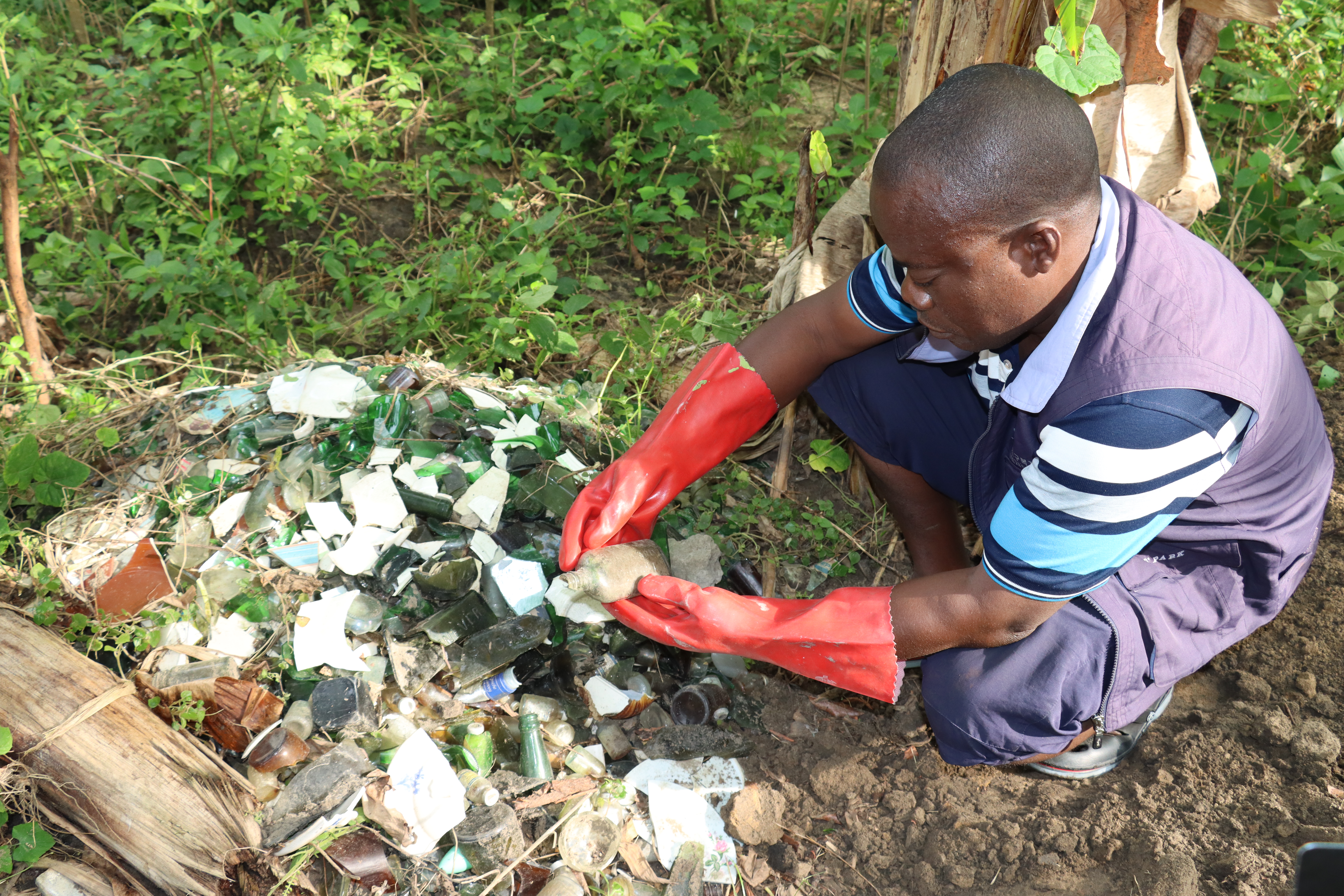
The call for the salvage excavation reached the management of the Edoid Cultural Heritage Enterprise when housebuilders discovered some ancient bottles during their construction project nearby. A heap of broken bottles was found under banana plantations in the yard, which prompted further investigation. The compound has suffered extensive destruction of old structures and objects to pave way for the construction of modern fabrics. During the excavation, an additional jar, wine, and gin bottles were unearthed.
Findings
Some significant artifacts were uncovered during the excavation:
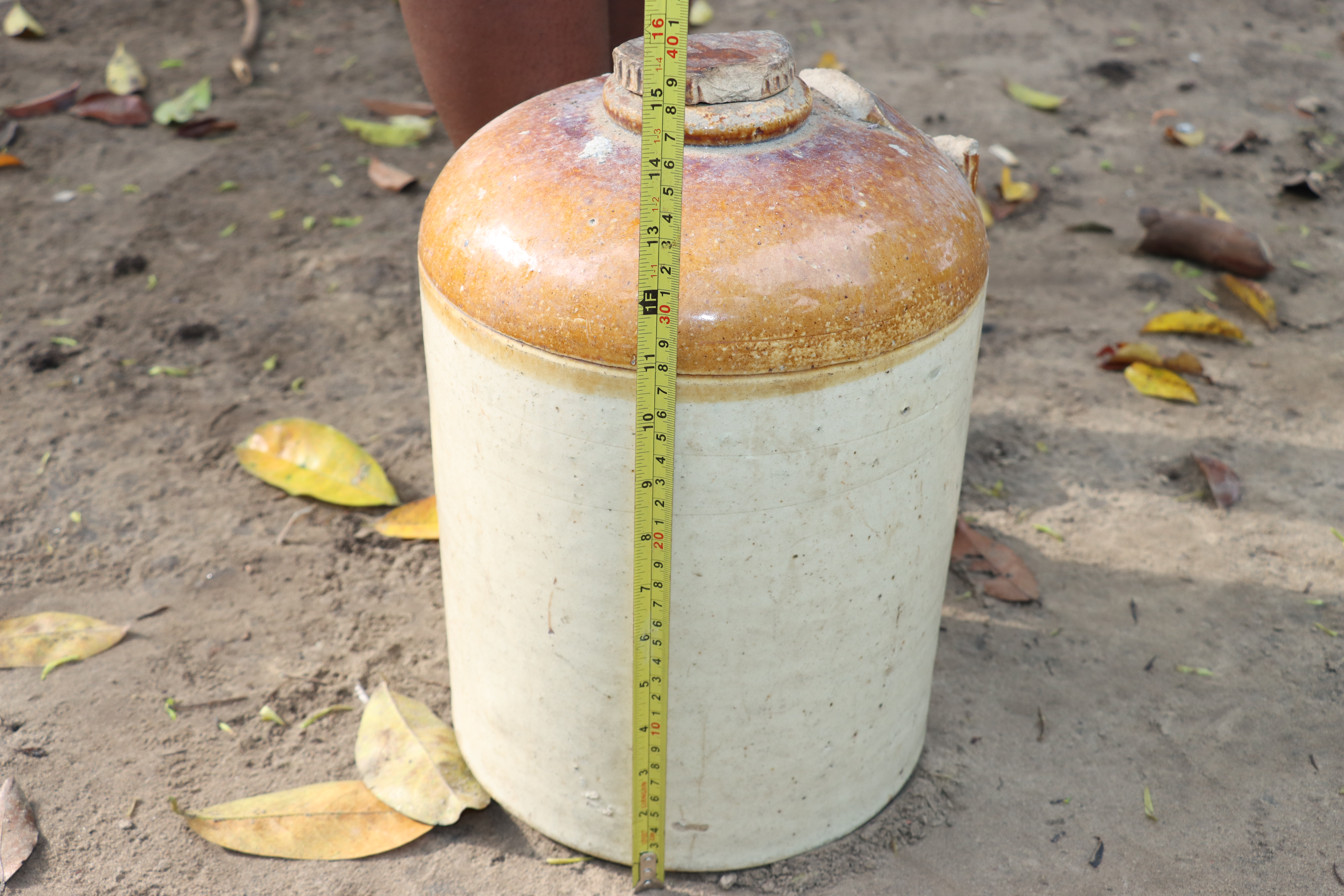
1. Ceramic Jar: A rum jar was found, indicating the high social status and wealth of the compound’s occupants. The lower body of the jar is coloured grey, but the upper part is brown. It soars above the other bottles, to a height of 30.5cm and 90cm in circumference. According to Mr. Abel Irikefe Odiete, the jar is locally called “isago”, a term that warrants further historical linguistic analysis. The jar has no inscription, but similar jars found elsewhere bore the initials ‘SRD’. The rum jar was popular with the military during WW1 and WW11, and may have been brought to Nigeria and Eghwu during one of the wars. Two prominent members of Eghwu community, Etaso and Awokri served in WW11. The jar was produced by Pearson & Co., Ltd. in Chesterfield, Derbyshire, UK, a company that existed from the 19th century to 1939.
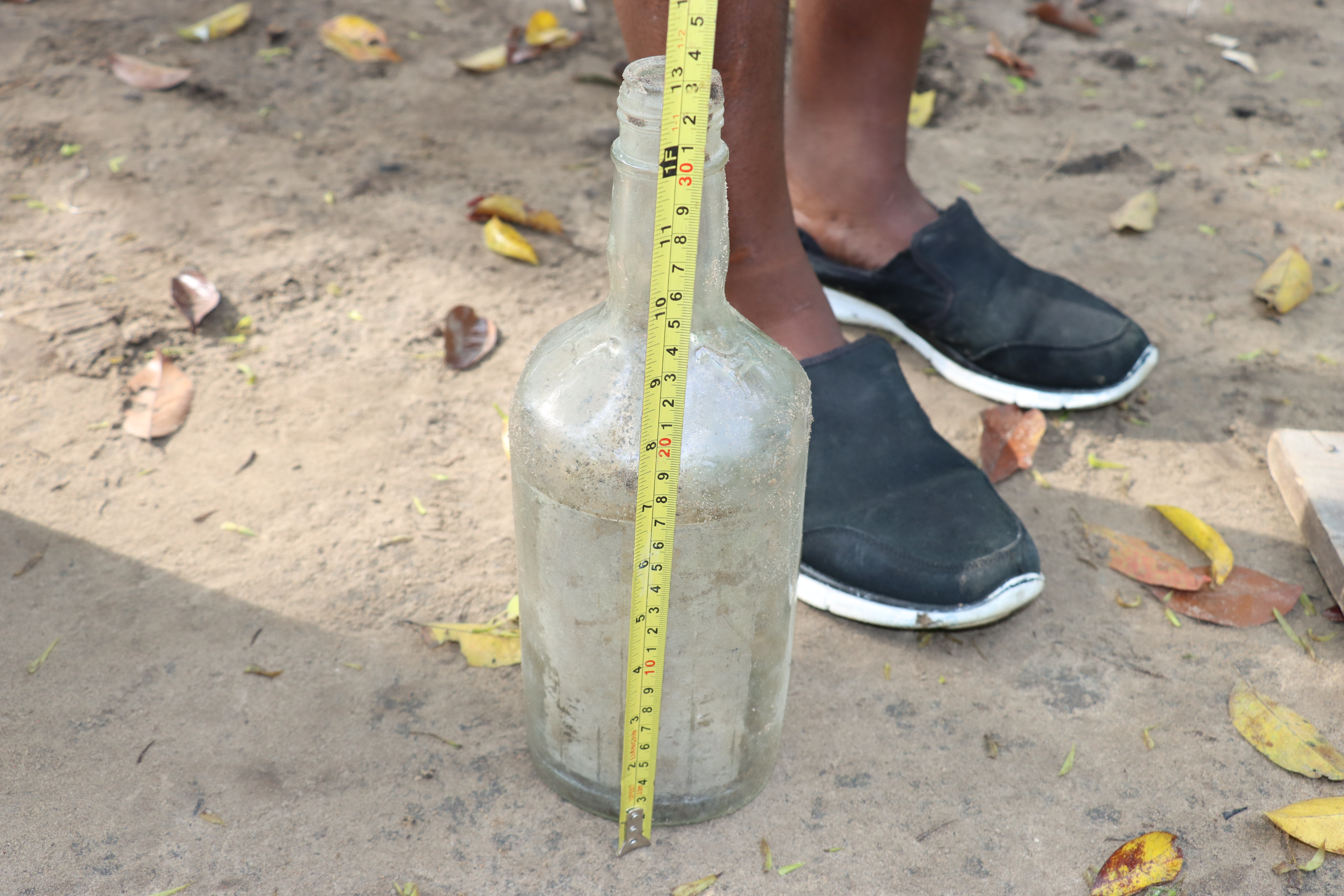
2. Bottles: A heap of broken bottles, as well as intact wine and gin bottles, were found under banana plantations and during excavation, suggesting trade and social practices. One of the bottles found is a large clear one with a handle and two embossed horses on the upper part of the body facing each other. On the base of the bottle is the inscription: “White Horse Distillers Ltd SC973 P 175 l 4 Liquor Bottle Scotland”. It’s measurements are: 31.5cm in full height, 13cm in width, 10cm in height of the neck, and the body is 21.5cm. White Horse Scotch Whisky was first produced purely for export by James Logan Mackie in Edinburgh in 1800’s, however, the “White Horse Distillers Ltd” name was adopted in 1924.
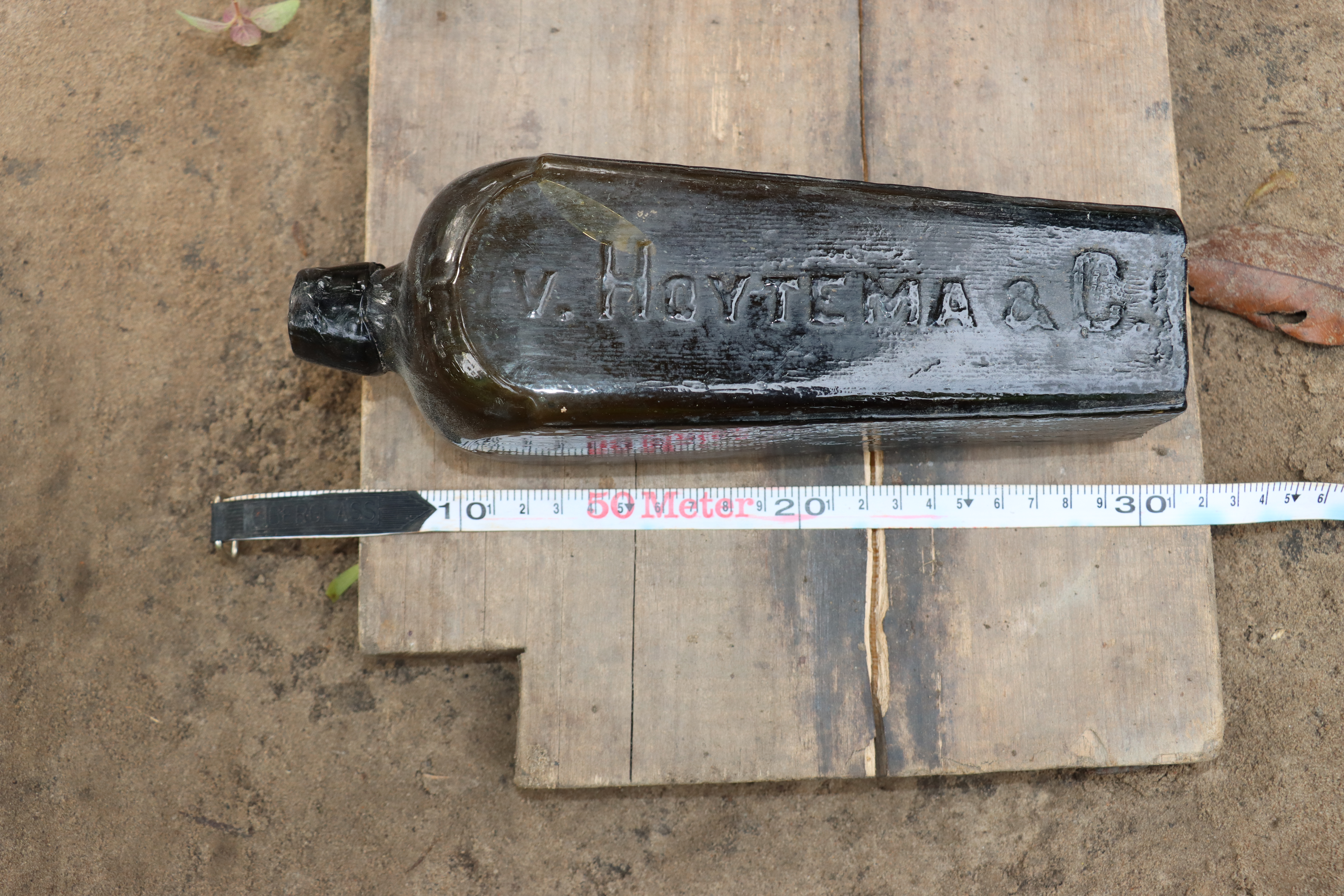
Another finding was a Dutch gin bottle, with the inscription “V. Hoytema & C” boldly embossed on the length of the light brown bottle. The body is square in cross-section and has a wide shoulder to a narrower cross-section at the base, which helped the prevention of bottles rolling at sea and breaking in cases. This gin was produced by Hoytema & Company Distillers of Culembore, Netherlands between 1830-1890. It was reported that a number of these gin bottles were found at the bottom of the Ethiope River of Abraka, another Urhobo community, that had been thrown overboard in the 1800’s by European slave traders who navigated the Niger River Delta of southern Nigeria and traded the Dutch Gin for African slaves (https://www.worthpoint.com/worthopedia/dutch-gin-liquor-bottle-nigeria-slave-131570245).
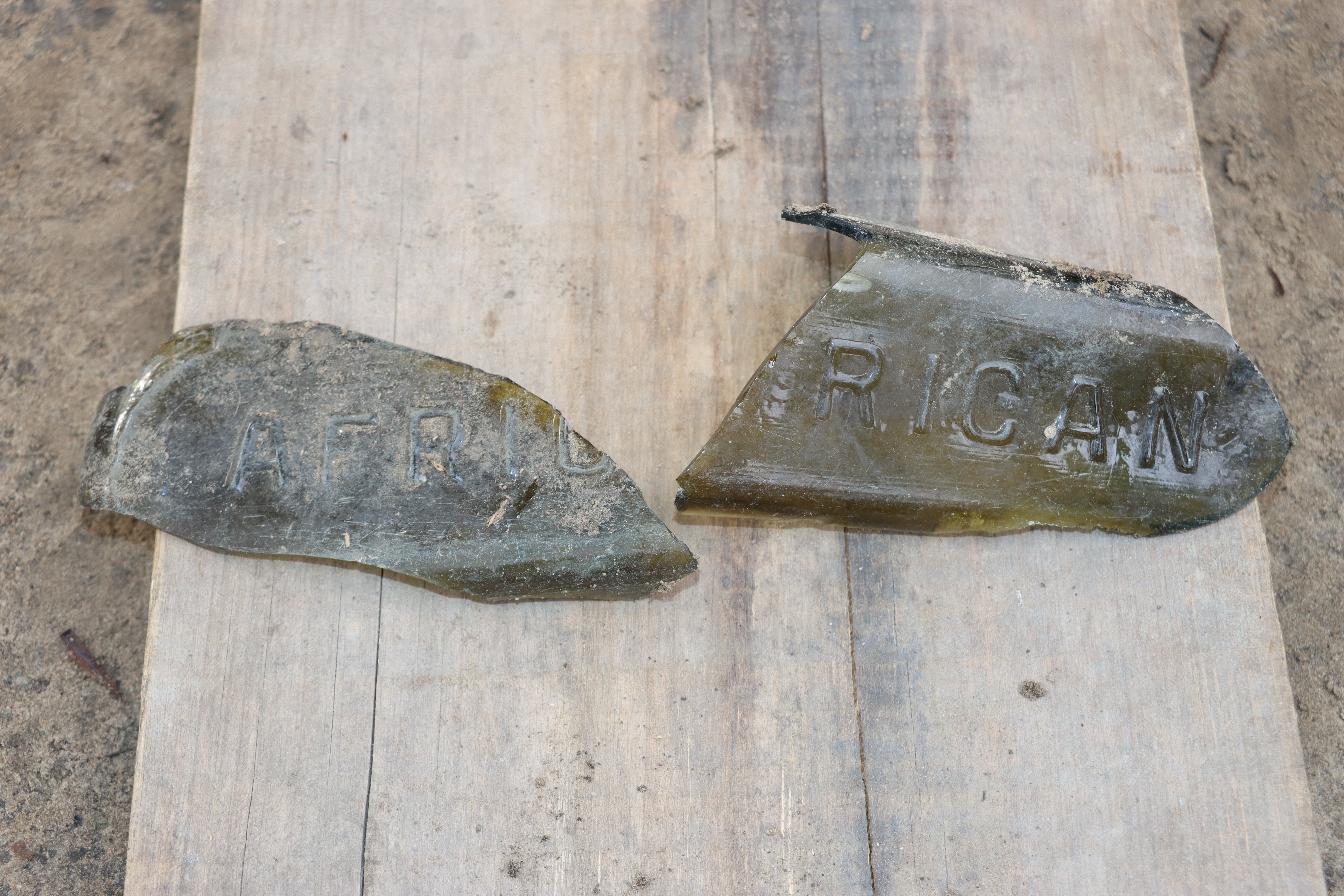
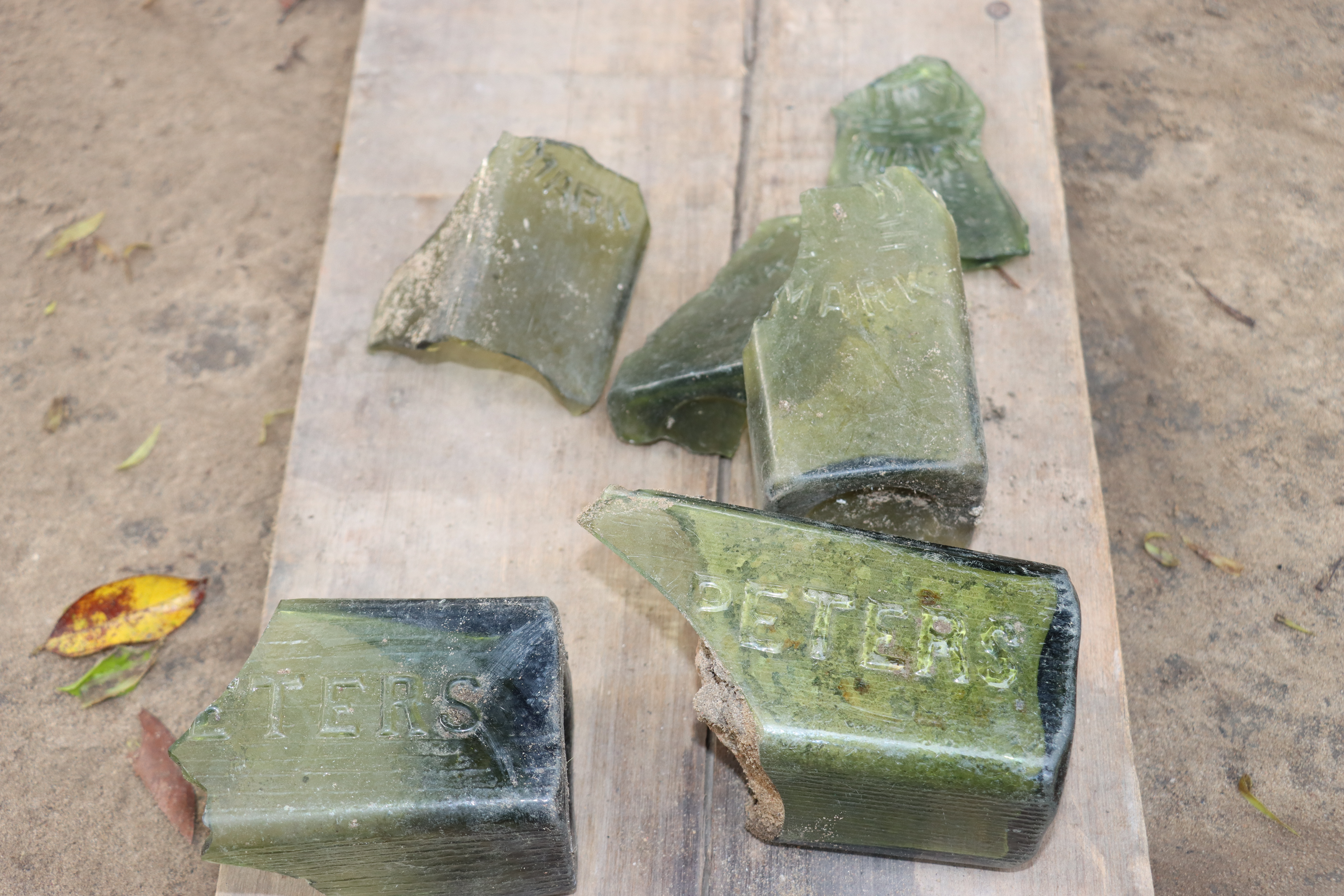
Furthermore, the findings included a broken part of a vintage J.J.W. Peters gin bottle and broken pieces of a mid-19th century olive green “African” case gin bottle from the Netherlands. The Olive amber bottle has “African” boldly embossed on it. The J.J.W. Peters gin has the terms “TRADE MARK” and a hunting dog holding a bird in its mouth embossed on it, and it dates back to between the 1880’s and 1890’s. It was significantly produced by the German distillery J.J.W. Peters. These bottles of gin were also brought to the Niger Delta region by slave traders.
Interpretation and Analysis
The artifacts and structures uncovered provide a glimpse into the opulent lifestyle led by Chief Odiete Diariarijere and his family. The jar and bottle fragments reflect both the domestic and administrative aspects of life at the compound. The presence of educational and healthcare institutions established by Chief Diariarijere underscores his significant contributions to the community’s development. Moreover, the archived objects and the standing architectural structures of the Maternity home and primary school would provide further valuable interpretation and analysis at a later time.
Conclusion
The salvage excavation at the compound of Olorogun (Chief) Odiete Diariarijere has provided essential insights into the material culture and lifestyle of a prominent colonial warrant chief in Eghwu-Urhobo. The findings emphasize the need for continued research and conservation efforts to preserve this valuable cultural heritage site. It shows that much knowledge of the past lives of local people can be unearthed from their use of bottles.
Recommendations
1. Conservation: Immediate measures should be taken to conserve the uncovered structures and artifacts.
2. Further Research: Additional archaeological and historical research should be conducted to fully understand the site’s significance.
3. Community Engagement: Local members of the family and Eghwu-Urhobo community should be involved in the preservation efforts to ensure sustainable conservation.
4. Educational Programs: Develop educational programs and materials to raise awareness about the historical and cultural importance of the site.
Acknowledgements
The excavation team extends gratitude to the Edoid Cultural Heritage Enterprise for their leadership, and for the funding that made this project possible; to the technical team for their contributions, to the researchers, and to Mr. Abel Irikefe Odiete, Ejiroghene Irikefe, and Omokiniovo Irikefe for their participation and support. Special thanks to the local community of Eghwu-Urhobo for their cooperation.
Akpobome Diffre-Odiete is a local researcher with experience in qualitative interdisciplinary research and ethnographic fieldwork. His interests are in endangered tangible and intangible cultural heritage, material culture, visual ethnography, narrative analysis, the interplay between linguistic and religious cultures, and the anthropology of religion, architecture, and built environments.
 EDOID CULTURAL HERITAGE ENTERPRISE
Leave a comment